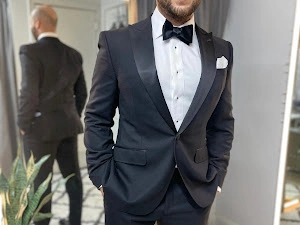

Buying your first custom suit comes down to seven decisions that matter most choose a versatile color (navy or charcoal), prioritize fit above all else, invest in 100% wool fabric, work with a tailor who takes 25+ measurements, stick to classic proportions, plan 4–8 weeks for production, and budget realistically (typically $800–$2,500 for made-to-measure and $2,000+ for true bespoke). The rest is refinement. Below, our master tailors at Maximus Custom Clothing share 25 specific, expert-backed tips drawn from decades of tailoring on Fifth Avenue and in Queens, NY to help first-time buyers avoid costly mistakes and walk away with a suit they’ll wear for years.
Contents On this Page
Why Your First Custom Suit Matters More Than You Think
A custom suit is one of the few purchases that pays compounding dividends. It changes how you carry yourself in interviews, how you photograph at weddings, and how clients respond in boardrooms. But the first one is also the most likely to go wrong because first-time buyers don’t know what questions to ask, what to insist on, or where tailors cut corners.
At Maximus Custom Clothing, we’ve fitted thousands of first-time clients across NYC, Queens, and Long Island. The patterns are clear: the same mistakes show up again and again, and the same handful of habits separate a suit you’ll wear weekly from one that lives in the back of your closet. Here are the 25 tips we wish every first-time buyer knew before walking through any tailor’s door.
Before You Book the Appointment
Tip 1: Define the Occasion Before You Define the Suit
Ask yourself one question: Where will I wear this most? A wedding guest suit, a daily business suit, a job-interview suit, and a black-tie tuxedo are four different garments. The fabric weight, color, lapel style, and even pocket design shift depending on the answer. First-time buyers who skip this step often end up with a “statement” suit that’s too memorable to wear twice a month a frequent and expensive mistake noted by bespoke tailors industry-wide.
Tip 2: Understand the Difference Between Custom, Made-to-Measure, and Bespoke
These terms are routinely confused, and that confusion costs buyers money.
- Off-the-rack: Pre-made, standard sizes. No personalization.
- Custom / Made-to-Measure (MTM): An existing base pattern is adjusted to your measurements. Strong fit, hundreds of fabric options, faster turnaround (typically 4–8 weeks).
- Bespoke: A brand-new pattern is hand-drafted from scratch using 25–30 of your measurements. Multiple fittings. Truly one-of-a-kind. Lead time of 8 weeks to 4 months.
For most first-time buyers, made-to-measure is the right entry point. Bespoke is the gold standard but is best reserved for second or third suits or for clients with unusual proportions who genuinely need it.
Tip 3: Set a Realistic Budget (and Know What Each Tier Buys You)
In NYC, made-to-measure suits typically range from $800 to $2,500, while true bespoke begins around $2,000 and can exceed $6,500 depending on fabric and house. For your first suit, the $1,000–$1,800 range hits a sweet spot: enough to get 100% wool, half-canvas construction, and a tailor who will spend real time with you, without paying for prestige you can’t yet appreciate.
Tip 4: Choose Your Tailor Before You Choose Your Fabric
The best fabric in the world cannot save a poorly cut suit. Vet your tailor first. Look for:
- A physical showroom (not just an online questionnaire)
- A team that takes 20+ measurements, not 6
- Reviews that mention multiple fittings and willingness to remake garments
- A tailor who is themselves well-dressed (yes, this matters)
- Transparency about where the suit is actually constructed
Tip 5: Plan Your Timeline Backward From the Event
A common mistake: ordering a wedding suit four weeks out. Custom suiting is a multi-week process — locally produced suits typically take 2–4 weeks for made-to-measure, and longer for bespoke. Start at least 8 weeks before any event where you must wear the suit. This buys you time for a second fitting if the fit isn’t right the first time — and it usually isn’t perfect on the first try.
Fabric & Construction Decisions
Tip 6: Fabric Is the Single Most Important Decision
Tailors universally agree on this point: a thousand sewing techniques cannot rescue a poor fabric. Fabric determines how the suit drapes, how it breathes, how it ages, and how it photographs. Spend more here than anywhere else.
Tip 7: Choose 100% Wool for Your First Suit
For your first suit, insist on 100% wool. It’s breathable in summer, warm in winter, naturally wrinkle-resistant, and ages beautifully. Avoid polyester blends (50/50 wool-poly is a clear signal of cost-cutting) and skip linen and pure cotton for a first investment — they wrinkle aggressively and are seasonally limited.
Tip 8: Don’t Chase High Super Numbers
“Super 150s” and “Super 180s” wools sound luxurious but are actually more delicate and wear out faster. For a workhorse first suit, Super 100s to Super 130s is the practical range. Save the ultra-fine wools for a special-occasion garment after you own your basics.
Tip 9: Insist on Half-Canvas or Full-Canvas Construction
A “fused” jacket has its inner structure glued to the wool. It looks fine new but bubbles and delaminates within a few years, especially after dry cleaning. Half-canvas (a canvas layer in the chest and lapels) is the minimum standard for a quality custom suit. Full canvas is better still and worth the upgrade if your budget allows.
Tip 10: Pay Attention to Lining
The lining affects breathability more than most first-time buyers realize. Bemberg (cupro) and silk linings breathe well; cheap polyester linings trap heat. At Maximus, we let clients choose between traditional and contrast linings — a small personal detail that doesn’t compromise versatility.
Tip 11: Don’t Get Seduced by Exotic Fabrics
Cashmere blends, mohair, and silk weaves are tempting but problematic for a first suit. They’re harder to maintain, more expensive to repair, and easier to damage. Build the foundation in wool first.
Color, Pattern & Style
Tip 12: Navy or Charcoal — Choose One and Don’t Overthink It
For a first custom suit, the answer is almost always navy or charcoal grey. Both work for job interviews, weddings (as a guest), funerals, business meetings, and dinners out. Navy is slightly more flattering on most skin tones; charcoal reads as marginally more formal. Either is correct. Black is not a versatile first-suit color it reads as funereal or service-industry in daylight settings.
Tip 13: Avoid Bold Patterns on Your First Suit
Solid fabrics win. A subtle weave (sharkskin, nailhead, or fine birdseye) adds texture without committing you to a “look.” Save windowpane checks, bold pinstripes, and statement plaids for your second or third suit, when you have a foundation to pair them against.
Tip 14: Pick a Lapel Width That Won’t Date
Skinny lapels date a suit fast; exaggerated wide lapels do the same. A medium-width notch lapel (roughly 3 to 3.5 inches at its widest) has been the safe standard for over a century and will still look correct in 2036. Peak lapels are stylish but more formal fine for a wedding suit, less versatile for daily wear.
Tip 15: Two Buttons, Single-Breasted, for Maximum Versatility
A two-button, single-breasted jacket is the most flexible silhouette ever made. Three-button jackets read older and date faster; double-breasted jackets are striking but specialized. Start with the classic.
Tip 16: Choose Double Vents Over Single or None
Most experts agree: double vents (slits on both sides of the back) look cleaner when you walk, sit, or put your hands in your pockets. Single vents are common but expose the back unflatteringly. Ventless jackets are an Italian tradition but restrict movement.
Tip 17: Keep the Trousers Classic
For your first suit, opt for a flat front, a medium rise (not low-rise), and a slight to medium break at the shoe. Avoid cropped hems, no-break trousers, or excessive taper — all of these are trend-driven and will read as dated within a few years. Cuffs are optional and traditionally pair with pleated trousers; flat-front trousers look cleaner without cuffs.
Fit & Fittings
Tip 18: Fit Is King — Above Brand, Price, or Fabric
A $400 suit that fits well will out-photograph a $4,000 suit that doesn’t. The single biggest visual difference between an off-the-rack and a custom suit isn’t the fabric it’s the shoulder, the chest, and the trouser break. This is precisely why a custom suit exists.
Tip 19: Watch the Shoulders Above All Else
The shoulder seam should sit exactly at the edge of your shoulder bone — not hanging over, not pulled in. Shoulder fit is the one thing a tailor cannot meaningfully fix after construction; it must be right from the pattern. If a tailor doesn’t measure shoulder slope (most people’s shoulders are uneven), look elsewhere.
Tip 20: Expect Multiple Fittings — And Use Them
A reputable custom tailor will book you for at least two fittings, often three. Use them. Sit down in the jacket. Reach for an imaginary handshake. Cross your arms. Walk. If anything pulls, bunches, or restricts movement, say so on the spot. Tailors expect adjustments — they’re not insulted by feedback, they’re insulted when you don’t speak up and then complain after delivery.
Tip 21: Bring the Shoes You’ll Actually Wear
For trouser hemming, the shoes matter enormously. A trouser break calibrated for sneakers will look wrong over dress shoes, and vice versa. Bring the exact pair you plan to wear most often with the suit — or a pair with an identical heel height.
Tip 22: Don’t Lose 20 Pounds Between Fittings
We say this gently but firmly: your body must be the same body at every fitting. If you’re on a fitness journey, finish the major changes before you begin the custom process. A suit built for one body cannot be rebuilt for another without essentially starting over.
After the Purchase
Tip 23: Dry Clean Sparingly — Brush and Steam Often
Dry cleaning is harsh on wool and degrades the fabric and construction. The professional standard is no more than once or twice per season, and only after visible soiling or strong odor. Between cleans, brush the suit with a soft horsehair garment brush after each wear and hang it on a proper wooden hanger with shaped shoulders. Steam (don’t iron) to refresh.
Tip 24: Store It Properly
Hang the jacket on a broad, contoured wooden hanger never wire. Use a breathable cotton garment bag (not plastic, which traps moisture). Rest the suit for at least 24 hours between wears so the fibers can recover. A second matching pair of trousers, ordered with the original suit, doubles the lifespan of the jacket because the trousers wear out first.
Tip 25: Build a Wardrobe, Not a One-Off
Your first custom suit shouldn’t be the end it should be the foundation. Think in terms of a two-year build: a navy suit first, charcoal second, then a versatile blazer, then perhaps a tuxedo or three-piece. At Maximus, we keep your pattern on file so each subsequent garment fits better than the last, and we make small adjustments at each new order. This is the real long-term value of custom: a tailor who knows your body.
Frequently Asked Questions
How much should a first custom suit cost?
For a first custom suit in NYC, expect to spend $800 to $2,500 for quality made-to-measure and $2,000 to $6,500 for true bespoke. The most common sweet spot for first-time buyers is the $1,000–$1,800 range, which buys 100% wool, half-canvas construction, and a proper multi-fitting process without paying for prestige you don’t yet need.
How long does a custom suit take to make?
Made-to-measure suits typically take 4 to 8 weeks from first fitting to delivery. Bespoke suits take 8 weeks to 4 months because they involve more fittings and entirely hand-drafted patterns. Always plan for at least two months before any deadline.
Is bespoke worth it for a first suit?
For most first-time buyers, made-to-measure is the smarter starting point. Bespoke is the highest level of tailoring but is best appreciated once you understand fit and have a base wardrobe. Bespoke makes the most sense for clients with unusual proportions or who already know exactly what they want.
What color should my first custom suit be?
Navy or charcoal grey, in a solid or subtle weave. Both colors work across job interviews, weddings, business meetings, and formal dinners. Black is not recommended as a first suit because it’s harder to dress for daytime and reads as overly formal in most professional contexts.
How many fittings does a custom suit require?
A quality made-to-measure suit involves at least two fittings an initial measurement and a final try-on. Bespoke involves three to five fittings across the construction process, including a baste fitting where the suit is loosely stitched together for shape correction.
Where is Maximus Custom Clothing located?
Maximus Custom Clothing serves clients throughout New York City. Our primary location is in Queens, NY (Maspeth), and we also serve Port Washington, Great Neck, Manhasset, Roslyn, and the broader Long Island area. We offer in-showroom appointments as well as free at-home and at-office consultations for clients who prefer a private fitting experience.
What’s the difference between Maximus Custom Clothing and an off-the-rack store?
At a major retailer, you buy what’s already cut and hope it fits. At Maximus Custom Clothing, the process begins with a one-on-one consultation, premium fabric selection from Italian and English mills, precise measurement across 20+ data points, multiple fittings, and a pattern kept on file for all future garments. The result is a suit built around your body and lifestyle, not a compromise.
Ready to Start? Book a Consultation With Maximus Custom Clothing
Your first custom suit should be an investment, not a gamble. At Maximus Custom Clothing, our family-run team has spent decades helping first-time clients in NYC, Queens, and Long Island get it right the first time with honest guidance, premium fabrics from the world’s leading mills, and a multi-fitting process that ensures you walk out with a suit you’ll wear for years.
Book your free consultation at our Queens showroom, or request a complimentary at-home or at-office fitting anywhere in the NYC metro and Long Island area.
Maximus Custom Clothing — Where every stitch is built around you.