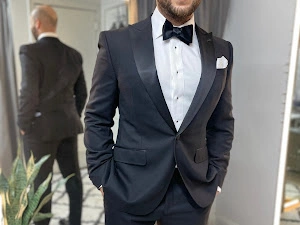
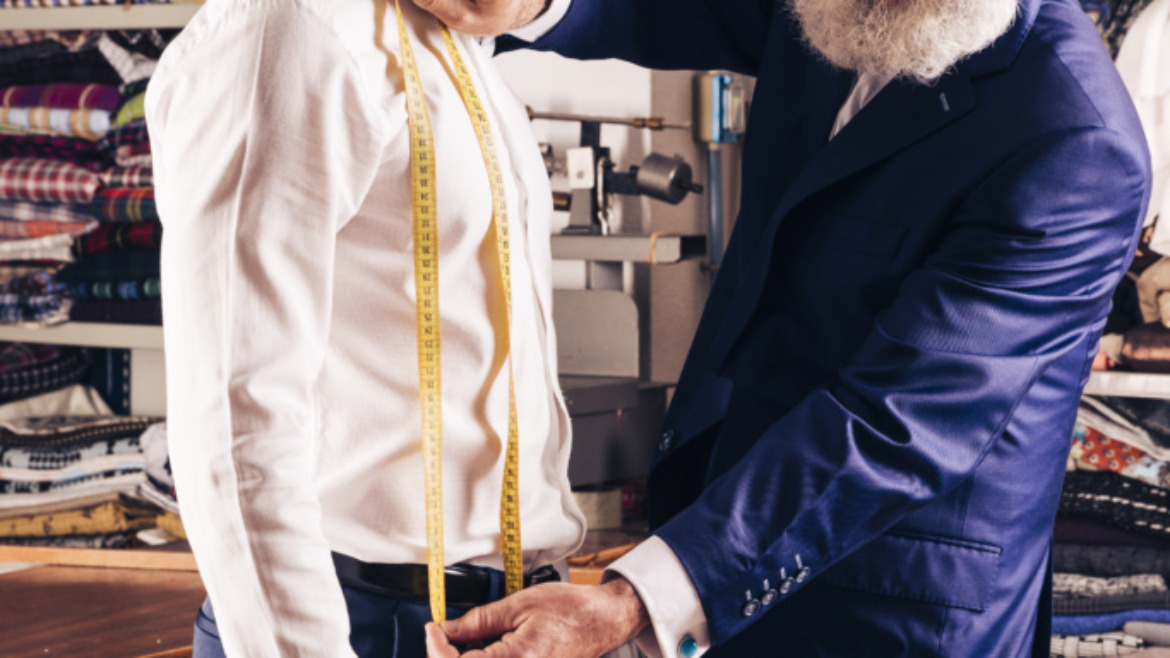
When comparing a custom suit vs. off-the-rack suit, the biggest difference is simple: an off-the-rack suit is made for a standard size, while a custom suit is created around your measurements, proportions, preferences, and intended use.
That difference affects much more than how the suit looks on a hanger. It influences fit, comfort, fabric choices, alterations, durability, personal style, and ultimately how confident you feel wearing it.
An off-the-rack suit can be a practical option if you need something quickly and your body proportions happen to work well with standard sizing. But if you wear suits regularly, have proportions that standard sizing struggles to accommodate, or want something created specifically for you, a custom suit can offer advantages that ready-made clothing cannot easily replicate.
Here are the seven differences that actually matter when deciding between a custom suit and an off-the-rack suit.
Contents On this Page
Custom Suit vs. Off-the-Rack: Quick Answer
A custom suit is made according to an individual’s measurements and style preferences, giving the tailor greater control over fit, proportions, fabric, construction, and design details.
An off-the-rack suit, also called ready-to-wear, is manufactured in predetermined sizes such as 38R, 40R, or 42L. You choose the size that fits you most closely and then make alterations where possible.
For many buyers, the choice comes down to this:
Choose off-the-rack if speed, convenience, and a lower initial price are your priorities.
Choose custom if fit, personalization, comfort, distinctive style, and long-term wardrobe value matter more.
It is also important to understand that “custom,” “made-to-measure,” and “bespoke” do not always mean exactly the same thing. If you want to understand the tailoring terminology before buying, read our guide to bespoke vs. made-to-measure suits.
Custom Suit vs. Off-the-Rack at a Glance
| Feature | Custom Suit | Off-the-Rack Suit |
|---|---|---|
| Fit | Built around individual measurements | Built around standard sizing |
| Alterations | Fit considered during creation | Often requires post-purchase alterations |
| Fabric Choice | Extensive selection | Limited to available inventory |
| Design Options | Highly customizable | Predetermined by manufacturer |
| Comfort | Designed around your proportions | Depends on how well standard sizing fits you |
| Availability | Requires production and fittings | Can usually be purchased immediately |
| Initial Cost | Usually higher | Usually lower |
| Personalization | Extensive | Limited |
| Best For | Frequent wear, weddings, business, unique proportions | Quick purchases and occasional wear |
1. Fit: A Custom Suit Starts With You
Fit is the most important difference between a custom suit and an off-the-rack suit.
Ready-to-wear manufacturers have to create clothing that works for thousands of people. That means jackets and trousers are built around standardized proportions.
The problem is that very few people have truly “standard” bodies.
You might have broad shoulders and a narrow waist. One shoulder may sit slightly lower than the other. You may have longer arms, a shorter torso, muscular thighs, a prominent chest, or a posture that changes the way a jacket naturally hangs.
An off-the-rack garment cannot anticipate all of these characteristics.
A skilled tailor creating a custom garment can account for your actual measurements and proportions from the beginning. At Maximus Custom Clothing’s custom tailoring service, measurements, fit preferences, fabrics, and design details are considered as part of the tailoring process.
That difference becomes especially noticeable around the shoulders, collar, chest, waist, jacket length, sleeve position, trouser rise, seat, and leg line.
Can an off-the-rack suit be tailored to fit perfectly?
Sometimes it can get very close, particularly when the original jacket already fits well through the shoulders and chest.
But alterations have limits.
A tailor can commonly adjust areas such as sleeve length, trouser length, waist suppression, and trouser taper. Major structural changes involving shoulders, armholes, jacket balance, or overall proportions can be considerably more complicated.
This is why choosing the correct starting size matters so much when buying ready-to-wear. For a deeper explanation, see our guide to common suit fit problems and how a tailor fixes them.
2. Customization: You Choose the Suit Instead of the Store Choosing for You
Walk into a traditional clothing store and your options are determined by what is hanging on the racks.
Perhaps you find the color you want, but not the lapel.
Maybe the jacket is perfect, but you dislike the lining.
Perhaps you prefer side adjusters instead of belt loops or want a ticket pocket, different buttons, a specific trouser rise, or a particular jacket configuration.
With off-the-rack clothing, you choose from the manufacturer’s decisions.
With a custom suit, those decisions become yours.
Depending on the tailoring process, customization can include:
- Fabric
- Color and pattern
- Lapel width and style
- Jacket buttons
- Pocket configuration
- Jacket vents
- Trouser rise
- Trouser pleats
- Trouser cuffs
- Linings
- Button styles
- Stitching details
- Monograms
- Waistcoat options
- Overall silhouette
This flexibility is especially valuable when building a professional wardrobe because your clothing can remain consistent with your personal style instead of changing every time retail trends change.
It also gives you the opportunity to create something distinctive without making the suit look overly fashionable.
A navy or charcoal suit, for example, can remain timeless while small decisions involving the lapel, fabric texture, buttons, lining, and proportions make it uniquely yours.
3. Comfort: Better Fit Changes How a Suit Feels
People often think about tailoring only in terms of appearance.
Comfort matters just as much.
A jacket that pulls across the back when you move your arms, trousers that feel restrictive when sitting, or a collar that shifts away from your neck can become frustrating during a long workday, wedding, dinner, or event.
Custom tailoring allows the garment to be shaped around both your body and the way you want the clothing to feel.
A client who wants a close contemporary silhouette may prefer different ease than someone who spends most of the day sitting in meetings or traveling.
Those preferences can be considered before the garment is completed rather than trying to correct everything afterward.
When a suit fits correctly, you should not have to constantly pull down your jacket, adjust your waistband, reposition your collar, or think about the garment every time you move.
The best-fitting suit often feels almost unnoticeable when you are wearing it.
4. Fabric and Construction: Custom Gives You More Control
The phrase “custom suit” does not automatically mean that every suit uses better fabric than every off-the-rack suit.
There are excellent and poor-quality examples in both categories.
The important difference is choice.
When purchasing ready-to-wear, you are limited to the combinations that the brand has already produced.
If the store has the style you want in a heavy cloth but you want something lighter, you may have to choose another suit entirely.
With custom tailoring, you can select cloth based on factors such as:
- Season
- Climate
- Frequency of wear
- Business or formal use
- Texture
- Weight
- Color
- Pattern
- Breathability
- Durability
Someone building a business wardrobe for New York may have completely different fabric requirements from someone commissioning a suit primarily for summer weddings.
A good tailor can help you balance appearance, practicality, climate, and durability rather than choosing fabric based only on color.
Construction matters as well. Ask your tailor how the suit is constructed, what materials are being used, and what level of handwork is included instead of relying solely on labels such as “premium,” “luxury,” or “custom.”
For traditional tailoring terminology, the Savile Row Bespoke Association’s tailoring glossary provides a useful reference for understanding terms used in bespoke tailoring.
5. Alterations: Off-the-Rack Usually Starts With Compromise
One of the most overlooked costs of an off-the-rack suit is alterations.
The retail price may appear significantly lower at first, but most ready-made suits still need adjustments.
Common alterations include:
- Hemming trousers
- Shortening or lengthening sleeves
- Taking in the jacket waist
- Adjusting trouser waist
- Tapering trouser legs
- Adjusting jacket length where construction permits
- Correcting collar issues
- Altering the seat or thigh
Minor alterations can dramatically improve an off-the-rack suit.
However, tailoring works best when the garment already fits reasonably well.
If the shoulders are substantially too wide, the armholes are poorly positioned, the jacket is much too short, or its proportions do not suit your body, alterations can become difficult, expensive, or impractical.
That means the real comparison is not always:
Custom suit price vs. off-the-rack price
A more useful comparison can be:
Custom suit price vs. off-the-rack suit + alterations + compromises that cannot be corrected
Before deciding, consider the complete cost of getting the finished garment you actually want.
If price is one of your main considerations, our guide on how much a custom suit costs explains the factors that influence custom-suit pricing.
6. Time: Off-the-Rack Wins When You Need a Suit Immediately
This is one area where off-the-rack clothing has a clear advantage.
You can walk into a store, find a suit that fits reasonably well, purchase it, and potentially wear it immediately.
Even if alterations are needed, turnaround can often be relatively quick.
Custom tailoring requires planning.
Measurements have to be taken, fabric and design details selected, the garment created, and fittings completed.
How many fittings are necessary depends on the tailoring method and the garment.
At Maximus Custom Clothing, the process includes consultation, measurements, fabric selection, design customization, fitting, adjustments, and final fitting. If you are unfamiliar with the process, our guide explaining how many fittings a custom suit needs can help you understand what to expect.
When should you order a custom suit for a wedding?
Do not wait until the final days before your event.
For weddings and major occasions, starting early gives you more time for fabric selection, fittings, adjustments, and coordination with the rest of the wedding party.
If you are dressing a groom and multiple groomsmen, Maximus also offers custom clothing for wedding parties.
If the invitation calls for black tie rather than a traditional suit, consider a custom tuxedo instead.
7. Long-Term Value: Think Beyond the Initial Price Tag
An off-the-rack suit generally has a lower starting price, which makes it attractive for someone purchasing a first suit or needing something for occasional wear.
But price and value are not the same thing.
The better question is:
How often will you wear the suit, and how well will it serve you when you do?
Imagine one suit costs less but rarely gets worn because it never feels comfortable or looks quite right.
Another costs more but becomes your default choice for meetings, weddings, dinners, presentations, interviews, and formal occasions.
The second garment may deliver greater value over time even though the initial investment was higher.
Think in terms of cost per wear.
A suit you wear 100 times provides very different value from something that stays in your closet after two events.
This is especially relevant for professionals who regularly wear tailored clothing. A versatile navy or charcoal custom suit paired with several custom shirts can form the foundation of a wardrobe that works across numerous occasions.
Is a Custom Suit Always Better Than Off-the-Rack?
No.
A good off-the-rack suit that fits your body well and is properly altered can look excellent.
Custom becomes especially valuable when standard sizing does not fit your proportions, when you want greater control over design, when comfort is a priority, or when you plan to wear the garment frequently.
Off-the-rack may make more sense when:
- You need a suit immediately
- Your body fits standard sizing well
- Your budget is limited
- You only wear suits occasionally
- You find a ready-made style you already love
Custom may make more sense when:
- Ready-made suits consistently fit you poorly
- You have athletic or non-standard proportions
- You wear suits regularly
- You want specific fabrics or design details
- You are buying for a wedding or major event
- Comfort is especially important
- You want a suit created around your personal style
The goal is not simply to buy the most expensive option. It is to choose the garment that makes the most sense for your body, wardrobe, budget, and lifestyle.
Custom Suit vs. Made-to-Measure vs. Bespoke
Another common source of confusion is assuming every suit that is not off-the-rack is automatically bespoke.
That is not necessarily the case.
Off-the-rack: The suit is manufactured in standardized sizes before you purchase it.
Made-to-measure: A pre-existing pattern or block is modified according to your measurements and preferences.
Bespoke: Traditionally, a unique pattern is developed specifically for the individual, with multiple fittings used to refine the garment during construction.
Custom suit: A broader term that may describe different levels of made-to-order tailoring depending on the tailor.
Because terminology varies throughout the clothing industry, ask exactly what process you are purchasing.
Questions worth asking include:
- Is the pattern created specifically for me?
- How many measurements do you take?
- How many fittings are included?
- What design elements can I customize?
- What fabrics can I choose from?
- How is the jacket constructed?
- Are alterations included?
- How long does the process normally take?
Understanding the process makes it much easier to compare one tailoring service with another.
Which Suit Is Better for a Wedding?
For a wedding, custom tailoring can be particularly valuable because the suit will be seen from numerous angles and photographed throughout the day.
You may also spend many hours wearing it.
Fit and comfort therefore matter considerably.
A custom wedding suit also gives the groom more control over fabric, color, lapel style, accessories, and details that coordinate with the overall wedding aesthetic.
For groomsmen, custom or coordinated tailoring can create a more consistent appearance while still accommodating different body types.
If you’re planning wedding attire in New York, explore Maximus Custom Clothing’s wedding party tailoring options.
Which Suit Is Better for Business?
For professionals who wear suits regularly, custom tailoring can make sense because versatility and repeated use increase the value of a well-fitting garment.
Start with classic colors.
A navy suit can work for business meetings, presentations, dinners, weddings, and many formal occasions.
Charcoal is similarly versatile and pairs easily with a broad range of shirts and ties.
Once the essential wardrobe is covered, you can explore subtle checks, stripes, textured fabrics, seasonal colors, and more distinctive designs.
The objective should be to create clothing that works with the rest of your wardrobe rather than purchasing individual statement pieces that are difficult to combine.
How Can You Tell if a Suit Fits Correctly?
Start with the shoulders.
The jacket shoulder should end close to where your natural shoulder ends without obvious overhang or pulling.
Next, examine the collar.
It should sit cleanly against your shirt collar rather than creating a noticeable gap.
Button the jacket and check the chest and waist. You want shape without strong pulling around the button.
Your sleeves should expose an intentional amount of shirt cuff, and your trouser length should create the break you prefer without unnecessary bunching.
Look at the suit from the front, side, and back.
A suit may look good from the front while revealing collar gaps, excess fabric, pulling, or imbalance elsewhere.
These details are why professional fittings can make such a significant difference.
Frequently Asked Questions About Custom Suits vs. Off-the-Rack
What is the main difference between a custom suit and an off-the-rack suit?
The main difference is how the garment is created. An off-the-rack suit is manufactured in standard sizes before purchase, while a custom suit is created or configured around the individual wearer’s measurements, proportions, and style preferences.
Are custom suits worth the money?
A custom suit can be worth the investment if you wear suits frequently, struggle with standard sizing, want greater comfort and personalization, or need clothing for important professional or formal occasions. Someone who rarely wears a suit and fits standard sizes well may be perfectly satisfied with a quality off-the-rack suit and alterations.
Is a custom suit more comfortable?
It can be. Because measurements, proportions, posture, movement, and fit preferences can be considered during the tailoring process, a well-made custom suit should feel balanced and comfortable. Comfort still depends on the quality of the tailoring, fabric, construction, and final fit.
Can an off-the-rack suit look as good as a custom suit?
Yes. If your proportions match the manufacturer’s pattern and the suit is properly altered, an off-the-rack suit can look excellent. Custom tailoring becomes increasingly useful when standardized sizing repeatedly produces fit problems.
Does an expensive off-the-rack suit automatically fit better?
No. Price does not guarantee fit. An expensive suit made for the wrong proportions can look worse than a more affordable garment that fits correctly. Fit should be evaluated separately from brand name and retail price.
What parts of an off-the-rack suit are difficult to alter?
Structural areas such as shoulders, armholes, jacket balance, and major jacket-length problems can be difficult or expensive to change. Sleeve length, trouser length, waist, jacket suppression, and trouser taper are generally more straightforward depending on the garment’s construction.
How long does a custom suit take?
Turnaround time varies based on the tailoring method, fabric, complexity, number of fittings, and tailor’s production schedule. Because a custom suit is not already sitting in inventory, you should plan ahead, particularly for weddings and major events.
Is bespoke the same as custom?
Not exactly. “Custom” is commonly used as a broad description for clothing personalized for an individual. Traditional bespoke tailoring has a more specific meaning and generally involves an individually drafted pattern and multiple fittings.
Custom Suit vs. Off-the-Rack: The Final Verdict
There is no rule that everyone needs a custom suit.
A quality off-the-rack suit can be an excellent choice when it fits your proportions well, meets your style requirements, and only needs minor adjustments.
But custom tailoring changes the starting point.
Instead of finding a standardized garment and asking a tailor to make it work for your body, the garment is developed around your measurements, preferences, and purpose.
That difference becomes particularly valuable if fit has always been difficult, you wear suits frequently, you are preparing for a wedding or important event, or you simply want more control over how your clothing looks and feels.
If you are deciding between a custom suit and an off-the-rack option, the best first step is to speak with an experienced tailor and evaluate what your body and wardrobe actually need.
Maximus Custom Clothing creates custom suits in New York for business, weddings, formal events, and everyday professional wardrobes. Our tailoring process helps clients choose the right fabric, fit, proportions, and design details for a garment created around them.
Contact Maximus Custom Clothing or book a fitting to begin creating a suit designed around your measurements, style, and lifestyle.