
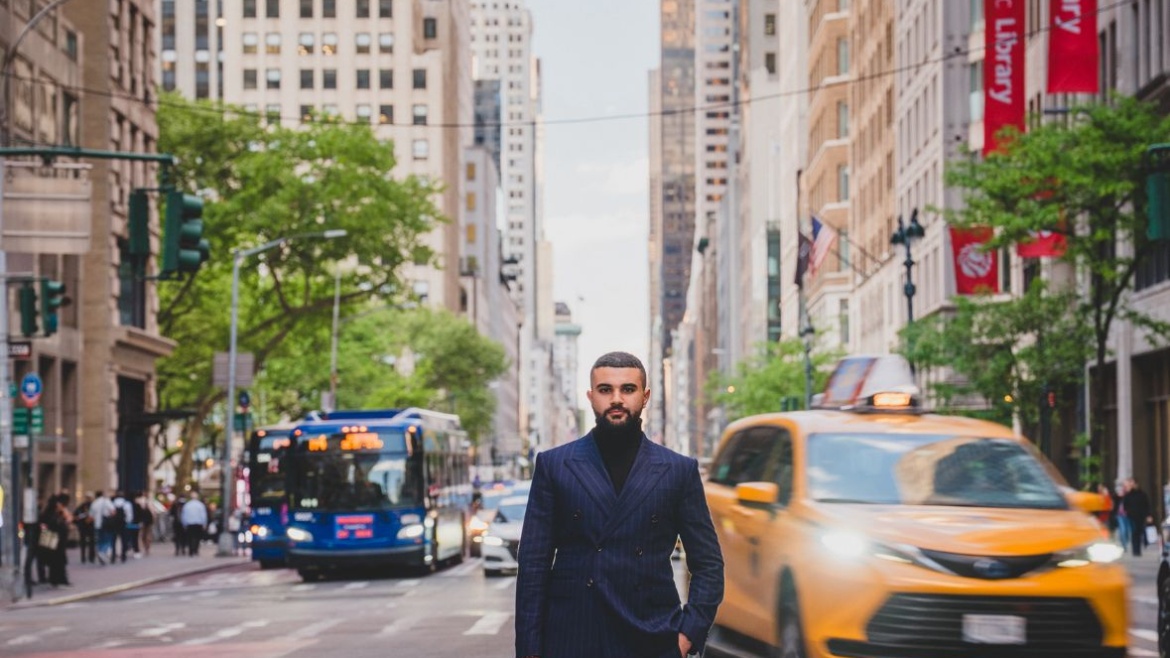
A suit can be made from the finest wool on Fifth Avenue and still look wrong if it doesn’t fit. Off-the-rack suits are cut for an average body that almost nobody actually has, so gaps, pulls, and bunches are the rule, not the exception. The good news? Most of these problems are exactly what a skilled tailor spends their day fixing.
Below are the fit problems we see most often at Maximus Custom Clothing, what causes each one, and how a tailor corrects it. Knowing the difference between an easy fix and a hard limit will save you money and help you buy smarter.
Contents On this Page
Why Suit Fit Matters More Than the Label
A well-fitting suit does two things at once: it flatters your frame and it disappears. When the fit is right, people notice you, not your clothes. When it’s wrong, every wrinkle and gap draws the eye. Fit is also about comfort. A jacket that pulls across the back or trousers that dig at the waist will have you fidgeting through the whole event. Getting the fit dialed in is the single highest-value thing you can do for how you look in a suit, and it usually costs a fraction of the garment itself.
Jacket Fit Problems
1. The Collar Gap
What it looks like: The jacket collar lifts away from the back of your neck instead of resting flush against your shirt collar. You’ll often see a horizontal fold of fabric bunching just below it.
Why it happens: The jacket doesn’t match the slope or posture of your shoulders and neck. It’s one of the most common off-the-rack complaints.
How a tailor fixes it: A tailor can often correct a minor collar gap by adjusting the collar and reshaping the area across the shoulders and upper back. Small gaps are very fixable. Large, stubborn gaps sometimes point to a deeper shoulder mismatch, which is harder and more expensive to resolve.
2. Shoulder Divots and Poor Shoulder Fit
What it looks like: A dent or dimple in the sleeve just below the shoulder seam, or shoulder seams that hang off the edge of your shoulder or sit too far inboard.
Why it happens: The shoulder of the jacket is the wrong width or shape for you. The shoulder is built into the structure of the garment, so it’s the hardest area to change.
How a tailor fixes it: Honestly, this is the one to be careful about. Reworking a jacket shoulder is major surgery — it means detaching the sleeve and rebuilding the seam, which is labor-intensive and not always worth it. This is why the golden rule of suit shopping is buy for the shoulders. Everything else can be altered; the shoulders should already be close to right. If they aren’t, a made-to-measure or bespoke suit is the better path.
3. The X-Pull at the Button
What it looks like: When you button the jacket, wrinkles radiate out from the button in an X shape, and the front panels strain apart.
Why it happens: The jacket is too tight through the chest and midsection for your build.
How a tailor fixes it: If there’s enough fabric in the seams, a tailor can let out the sides and rebalance the front to release the tension. There are limits, though — a jacket that’s several sizes too small simply doesn’t have the material to give. A good tailor will tell you honestly whether the fix is worth it or whether you’d be better served by a different size or a custom cut.
4. A Boxy, Shapeless Waist
What it looks like: The jacket hangs straight down like a sack with no taper at the waist, leaving you looking wider than you are.
Why it happens: The jacket was cut generously and never shaped to your torso.
How a tailor fixes it: This is one of the most satisfying and common alterations. A tailor takes in the side seams and the center back seam to introduce waist suppression, giving the jacket a clean V-shape that follows your body. It’s a straightforward fix that dramatically improves how a suit reads.
5. Sleeves Too Long or Too Short
What it looks like: Jacket sleeves that swallow your hands, or ride so high they expose your whole shirt cuff. The classic target is about a quarter to half an inch of shirt cuff showing.
Why it happens: Standard sizing sets one sleeve length per size, and your arms rarely match it exactly.
How a tailor fixes it: Shortening or lengthening sleeves is bread-and-butter tailoring. Most jackets have enough fabric at the cuff to adjust an inch or more in either direction. If your jacket has working buttonholes on the cuff, the alteration is done from the shoulder instead, which is a bit more involved but still routine.
6. Twisting or Rippling Sleeves
What it looks like: The sleeve doesn’t hang cleanly. It twists, or ripples appear along the back or front of the arm.
Why it happens: The “pitch,” or the angle at which the sleeve is set into the shoulder, doesn’t match the natural angle of your arm.
How a tailor fixes it: A tailor can detach the sleeve and reset it at the correct pitch so it hangs straight. It’s a more skilled alteration than a simple hem, but an experienced hand corrects it cleanly.
7. Wrinkles Across the Upper Back
What it looks like: Horizontal folds bunching across the top of the back, or vents that flare open and won’t sit flat.
Why it happens: Excess fabric across the back, a posture mismatch, or a jacket cut too tight through the seat, which pulls the vents apart.
How a tailor fixes it: Depending on the cause, a tailor removes excess fabric through the center back seam or lets out a too-tight seat so the vents relax and close. Vents that flare are usually a symptom of tightness lower down, so the fix often starts there.
8. Jacket Length Off
What it looks like: A jacket that ends too high, chopping your torso short, or hangs so low it covers your seat and shortens your legs.
Why it happens: Jacket length is tied to your height and proportions, and off-the-rack lengths are coarse.
How a tailor fixes it: Minor shortening is possible, but jacket length is limited by the pockets and the overall balance of the design, so it’s not adjustable the way trousers are. This is another area where getting the base size right matters, and where custom tailoring removes the guesswork entirely.
Trouser Fit Problems
9. Waist Too Loose or Too Tight
What it looks like: A waistband you have to cinch with a belt, or one that digs in and gaps at the back.
How a tailor fixes it: Trouser waists are among the easiest and most common alterations. A tailor takes in or lets out the center back seam, usually by an inch or two in either direction, for a clean, secure fit with no bunching.
10. A Baggy or Overly Tight Seat
What it looks like: Sagging, empty fabric under the seat, or fabric pulling tight with strain lines when you sit or move.
How a tailor fixes it: Adjusting the seat and rear rise is standard work. A tailor reshapes the seat seam to remove sag or release tightness so the trousers drape smoothly. It makes a big difference in both comfort and appearance.
11. The Wrong Break
What it looks like: Trousers puddling in folds over your shoes (too much break) or floating well above them (too short).
Why it happens: Inseam length rarely matches your leg out of the box.
How a tailor fixes it: Hemming is the most routine alteration there is. A tailor sets the length to your preferred break — full, medium, or a clean modern no-break — and can add a cuff if you like. It’s quick, affordable, and transforms how finished a suit looks.
12. Legs Too Wide or Too Baggy
What it looks like: Trouser legs that billow around your calves and ankles, drowning your silhouette.
How a tailor fixes it: Tapering the legs is a popular fix, especially on older or off-the-rack trousers. A tailor slims the leg from the knee down (or the thigh down for a fuller taper) to create a cleaner, more contemporary line while keeping enough room to move.
What a Good Tailor Can — and Can’t — Fix
Here’s the honest picture. A skilled tailor can transform almost any suit’s waist, sleeves, hem, seat, and taper, and can meaningfully improve the chest, back, and collar. What sits at the edge of alteration is the shoulder and, to a lesser degree, the overall jacket length and chest width — these are built into the bones of the garment.
The practical takeaways:
- Buy for the shoulders and the chest. These are the hardest to change, so start with a base garment that fits them well.
- Expect to alter almost everything else. Even an expensive suit usually needs a hem, a waist adjustment, and often a jacket taper to look its best.
- If the base never fits, go custom. When off-the-rack always fights your frame — long arms, a full seat, sloped shoulders, an athletic build — a made-to-measure or bespoke suit is cut to your measurements from the start, so there’s nothing to fight against later.
Get the Perfect Fit at Maximus Custom Clothing
At Maximus Custom Clothing, alterations and custom tailoring are the heart of what we do. Our master tailors have decades of hands-on experience taking in, letting out, reshaping, and rebalancing suits until they fit the way they should. Bring in a suit that’s never sat right, or start fresh with a custom suit cut to your exact measurements either way, we make sure you walk out with a fit that feels effortless.
We serve clients across NYC, Queens, and Long Island, with locations on Fifth Avenue, in Forest Hills, and in Uniondale, and we offer on-site consultations for corporate teams.
Ready to fix the fit? Call us or book your fitting online. Perfect fit, guaranteed.